
The Minerals Income Investment Fund (MIIF) has reported a profit of approximately GH¢1.1 billion for 2025, down from GH¢1.9 billion in 2024, which is a decline of roughly GH¢800 million, or a 42% year-on-year decline. The Fund, in its report, saw a decline in free cash holdings compared to 2024.
While the Fund remains profitable, the magnitude of the decline invites reflection on a broader issue that extends beyond one year’s financial performance: the importance of continuity in the management of strategic state-owned institutions.
State-owned investment funds are designed to create value over decades, not merely within the tenure of a particular management team. Their success depends on consistent strategy, preservation of institutional knowledge, and disciplined execution of long-term investment programs.
Frequent changes in strategic direction can interrupt value creation, delay major projects, and ultimately reduce financial returns.
MIIF’s recent history provides an important case study.
Under the previous management led by Edward Nana Yaw Koranteng, the Fund embarked on a number of strategic initiatives aimed at transforming Ghana’s participation in the mining industry from passive royalty collection to active ownership, investment, value addition, and capital market development.
Among the most significant achievements was MIIF’s investment in Bibiani Gold Mine, which contributed to the revival of the mine after an eleven-year shutdown. The reopening restored economic activity in the Bibiani area and reportedly created approximately 7,000 direct and indirect jobs, providing renewed livelihoods for thousands of families and businesses.
MIIF also invested in Asante Gold Corporation, supporting the acquisition of Chirano Gold Mine from Kinross Gold Corporation between 2022 and 2023. By November 2025, MIIF’s investment in Asante Gold covering both Bibiani and Chirano had reportedly appreciated by approximately 40%, demonstrating the value that can be created through patient, long-term strategic investments.
In 2023, the Fund was led by Koranteng and supported by the previous CEO of the Minerals Commission, Martin Ayisi, and negotiated Ghana’s first lithium mining agreement, which was widely praised by several industry observers.
Policy analyst Steve Manteaw, among others, described the agreement as one of the best negotiated mineral agreements in Ghana’s history. Through that transaction, MIIF became the third-largest shareholder in Australia’s Atlantic Lithium, globally giving Ghana a significant strategic position in one of the world’s emerging critical minerals companies.
Equally noteworthy was MIIF’s deliberate effort to deepen Ghana’s capital markets. Major investments were structured to facilitate listings on the Ghana Stock Exchange, allowing ordinary Ghanaians to invest alongside the state in strategic mining assets while improving liquidity and strengthening the domestic capital market.
Atlantic Lithium and Asante Gold of Canada were compelled by MIIF to be listed on the Ghana Stock Exchange in 2023 and 2024, respectively, with Electochem planned to be listed between 2025 and 2027.
Perhaps the Fund’s most innovative initiative was the MIIF Gold Trade Programme. Beginning with an initial revolving facility of approximately US$30 million, the programme reportedly generated over US$1 billion during 2024 within eleven months of operation.
It later became the blueprint for Ghana’s GoldBod initiative and remains notable as the only publicly owned gold trading operation reported to have generated a profit during its first full year of operations in 2024, as captured in the MIIF 2024 audited financials.
The previous MIIF administration also unveiled several strategic initiatives designed to create long-term value for Ghana’s mining sector.
These included the MIIF Small-Scale Mining Incubation Programme, intended to formalise and improve responsible small-scale mining; the proposed MIIF Technical Building at the University of Mines and Technology (UMaT) to strengthen mining research and technical capacity launched in 2024, the ongoing MIIF Scholarship Scheme for women in mining launched in 2023/24, the proposed MIIF–Re Element(USA) $100 million lithium processing project, aimed at promoting local value addition to Ghana’s lithium resources; and a proposed Gold-Backed Exchange Traded Fund (ETF) to be listed on the Ghana Stock Exchange, providing investors with a new avenue to participate in Ghana’s gold sector.
Many of these initiatives have since seen little or no public progress. Some appear to have been placed on hold, while others have not advanced publicly.
It is, however, noteworthy that the inter-agency framework established in 2023, as reported by MIIF in its 2026 report, is still intact under the new MIIF management, which is largely responsible for the increase in royalty collections.
This naturally raises an important policy question: should strategic national projects that have the potential to create long-term economic value be allowed to lose momentum following changes in leadership?
This is not an argument that every initiative introduced by a previous administration must continue unchanged. Effective governance requires regular evaluation, accountability and, where necessary, course correction.
However, where programmes have demonstrated strategic merit and early success, continuity should generally be the guiding principle. Strong institutions are built by successive leaders improving and expanding successful initiatives and not by repeatedly replacing them.
The reported GH¢800 million decline in MIIF’s annual profit should therefore be viewed as an opportunity to reflect on the value of institutional continuity and the need to underscore the fact that MIIF is a sovereign wealth fund and an investment vehicle.
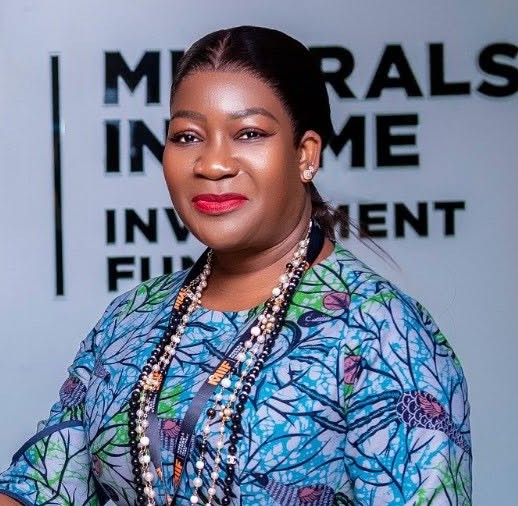
The current MIIF management, led by Mrs Justina Nelson, is yet to present any investment or initiative to the general public in the nearly 2 years of taking over the reins.
Sustainable wealth creation requires patience, consistency and the ability to build upon established foundations.
The most successful sovereign wealth funds and state investment institutions around the world share one defining characteristic: their strategies outlive individual leaders.
Ghana’s strategic institutions should aspire to the same standard. The country’s mineral wealth is too important for progress to be interrupted by changes in management. Continuity, supported by strong governance and accountability, remains one of the most valuable assets any national institution can possess.



![Bright Simons writes: Ghana’s billion-dollar ‘timber merchant’ deal to protect taxes [Article]](https://mynewssourceonline.com/wp-content/uploads/2024/01/bb.webp)