

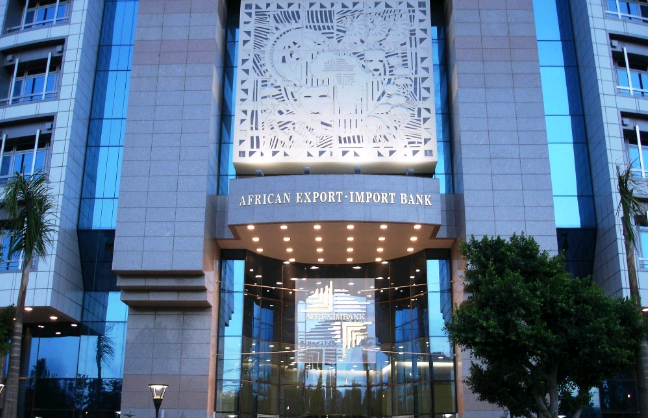
Afreximbank’s return to investment-grade status has been hailed as a major victory for African finance. Yet the most consequential message from its new rating may be what was left out.
When S&P Global Ratings restored the African Export-Import Bank to investment grade on June 11, assigning it a BBB+ rating with a stable outlook, the move appeared to vindicate the lender after a bitter dispute with Fitch Ratings earlier this year.
Afreximbank welcomed the decision as recognition of its financial strength and role in supporting African economies.
But investors looking beyond the headline found a more significant signal buried in S&P’s methodology: the agency did not factor preferred-creditor status into its assessment.
That distinction could reshape how markets view a growing class of African development lenders.
The rating returns, but the privilege does not
The BBB+ rating places Afreximbank one notch above Moody’s Baa2 assessment and three notches above the BB+ rating assigned by Fitch before the relationship between the agency and the bank broke down. It is S&P’s first rating of Afreximbank in nearly 12 years.
The agency cited the bank’s strong record as a countercyclical lender and continued shareholder support. Equity has grown to $8.4 billion from $1.3 billion since 2015, while total assets have expanded to $42.3 billion from $7.1 billion over the same period.
Yet S&P stopped short of granting Afreximbank the same presumed seniority typically enjoyed by institutions such as the International Monetary Fund and the World Bank.
Those organisations are generally repaid ahead of other creditors during sovereign debt restructurings, a protection that supports their strong credit standing.
S&P concluded that Afreximbank’s business model differs materially because nearly 80% of its portfolio is directed to private-sector borrowers rather than governments.
In the agency’s view, a lender focused primarily on companies cannot automatically claim the protections traditionally associated with sovereign-focused multilateral institutions.
The debate is not merely theoretical.
Ghana’s debt restructuring provided a real-world test. Under the country’s restructuring agreement reached in December 2025, Afreximbank’s $750 million sovereign loan was treated in a manner that the IMF deemed consistent with the principle of “comparability of treatment”.
In effect, the lender shared losses alongside other creditors rather than being repaid ahead of them.
That episode became a key point of contention between Afreximbank and Fitch.
While Fitch viewed it as evidence that preferred-creditor status had failed in practice, S&P reached a different rating conclusion despite acknowledging the same underlying facts.
The unresolved case in Zambia continues to attract attention. Afreximbank’s exposure remains in arrears and the bank has pursued legal action against defaulting sovereign borrowers.
For some observers, the image of a multilateral institution taking its own shareholders to court highlights the complex hybrid nature of its model.
A changing landscape for African development finance
The implications extend far beyond a single institution.
For decades, investors have largely treated multilateral development banks as a homogeneous asset class, assuming a degree of seniority and protection during sovereign debt crises.
S&P’s approach introduces a new distinction. The level of protection afforded to lenders may increasingly depend on the composition of their portfolios and the balance between public and private-sector lending.
Institutions that combine development mandates with commercial objectives may no longer be able to rely on assumptions traditionally associated with multilateral status.
The debate has also sparked reactions from African policy circles.
“One cannot help but question whether Fitch’s downgrades of Afreximbank were entirely about fundamentals,” wrote Misheck Mutize, lead expert on rating agencies at the African Peer Review Mechanism. He argued that agencies should remain focused on objective assessments of credit risk.
At the same time, Afreximbank has quietly expanded its access to alternative sources of capital.
China’s CCXI assigns the lender its highest AAA rating, while Japan’s JCR rates it A-. These assessments have opened new funding channels, including China’s Panda bond market and Japan’s Samurai bond market.
The strategy has already produced results.
Afreximbank issued a debut Samurai bond in late 2024 after a three-year absence, followed by a Panda bond in early 2025 and a second Samurai bond later that year.
Together, the transactions raised more than $800 million.
The development underscores a broader shift in global finance.
A lender whose standing remains debated among Western rating agencies can increasingly access capital through alternative rating systems that assess African risk differently.
The divergence is striking. An institution carrying a top-tier rating in Beijing can still face scepticism in parts of Western financial markets.
For issuers, that growing diversity of rating opinions is becoming a strategic advantage, much like diversification across funding currencies.
For investors, the episode serves as a reminder that old assumptions about multilateral lenders may no longer hold.
Afreximbank’s new rating restores investment-grade credibility. But it also signals a deeper transformation in the architecture of development finance: preferred-creditor status is no longer an automatic entitlement for Africa’s emerging generation of development lenders.
S&P may have closed one chapter in the debate. In doing so, it has opened a much larger conversation about how African financial institutions will be judged in a rapidly changing global system.