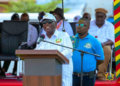

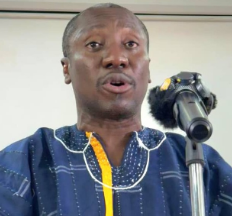
The Minority Leader, Alexander Afenyo-Markin, has called on President John Dramani Mahama’s administration to account for repeated international narcotics seizures involving consignments reportedly originating from Ghana, warning that the incidents pose risks to the country’s national security and international reputation.
He said the recurring interceptions of large quantities of drugs in foreign jurisdictions raised concerns about the effectiveness of Ghana’s port security, cargo inspection procedures, customs controls and intelligence coordination.
“Our ports must serve legitimate commerce. Our borders must command respect. Our young people deserve protection. Our country’s reputation deserves defending. The government must act,” he said.
Speaking at a Leaders’ Media Briefing ahead of Parliament’s resumption, Mr Afenyo-Markin disclosed that the Minority, through its First Deputy Whip, Habib Iddrisu, had filed a review of the Speaker’s September 29 ruling under Standing Order 127.
The ruling concerned a private members’ motion seeking a parliamentary inquiry into major narcotics seizures and possible institutional and regulatory failures that may have contributed to the incidents.
Mr Afenyo-Markin said the Minority was not seeking to undermine the authority of the Speaker but wanted Parliament to discharge its constitutional responsibility of scrutinizing public institutions.
“We have a duty to raise those questions, and we intend to discharge that duty once Parliament resumes,” he said.
He maintained that ongoing criminal prosecutions should not prevent Parliament from investigating possible lapses in public administration, port security and regulatory oversight.
According to him, while criminal courts determine the guilt or innocence of accused persons, Parliament has a separate responsibility to examine whether public institutions fulfilled their mandates and whether existing laws and security arrangements were adequate.
“The prosecution of individuals, however necessary, cannot absolve the government of its responsibility to account for the institutional and regulatory weaknesses that may have facilitated these incidents,” he said.
The Minority also indicated that the caucus has filed an application seeking a review of Speaker Alban Bagbin’s ruling rejecting its private members’ motion for a parliamentary inquiry into major narcotics seizures linked to Ghana.
Minority Leader Alexander Afenyo-Markin said the application was filed through the First Deputy Whip, Habib Iddrisu, under Standing Order 127 of Parliament’s Standing Orders.
The application challenges Mr Bagbin’s September 29, 2026, decision to reject the proposed inquiry into the narcotics seizures and possible institutional, regulatory and security failures that may have facilitated them.
Mr Afenyo-Markin said the application was not intended to undermine the Speaker’s authority but to protect Parliament’s constitutional responsibility to hold public institutions accountable.
“We respect the office of the Speaker and recognise the constitutional responsibility entrusted to its occupant. However, the respect for the office does not require silence when a ruling raises a serious question about the constitutional powers of Parliament and the ability of elected representatives to demand accountability from public institutions,” he said.
Mr Bagbin rejected the proposed inquiry on September 29, arguing that it could interfere with ongoing criminal proceedings relating to the narcotics seizures.
He held that the proposed parliamentary investigation would traverse factual matters directly connected with cases before the criminal justice system, raising concerns about the application of the sub judice principle.
In a related development, the Minority in Parliament has announced plans to summon the Minister for Lands and Natural Resources, Emmanuel Armah-Kofi Buah, to explain reports that miners could operate without licences and be regularised later.
Minority Leader Alexander Afenyo-Markin said the caucus was concerned about reported comments attributed to the CEO of the Ghana Gold Board, Sammy Gyamfi, suggesting that miners could begin operations without licences and subsequently regularise their activities.
He said the position appeared inconsistent with the requirements of the Minerals and Mining Act, 2006 (Act 703), which regulates mining activities in Ghana.
Afenyo-Markin said the Minority would seek to have the minister appear before the House to clarify the government’s position.
“The Minerals and Mining Act 2006, Act 703, admits no exception, and registration and regularisation must never become an amnesty,” he said.
In a public speech, Sammy Gyamfi said miners operating outside restricted areas, such as water bodies and forest reserves, could be allowed to mine while their activities were regularised.
Section 82(1) of Act 703 requires a licence to be in existence before a person undertakes small-scale mining operations. The law therefore requires a license for such operations.
Lands and Natural Resources Ghana.
Mr Afenyo-Markin said the government must clarify its position and demonstrate that its approach to formalising small-scale mining would not undermine existing legal requirements.
He also called for bipartisan cooperation to address illegal mining, popularly known as galamsey, warning that protecting the country’s natural resources should not be treated as a partisan issue.
“Our rivers and forests are not partisan,” he said.
The Minority Leader said the caucus would pursue the matter in Parliament and demand an explanation from the Lands and Natural Resources Minister.