
NPP Presidential Candidate Dr. Mahamudu Bawumia says he has found a potential sustainable solution to Ghana’s galamsey menace after visiting a Japanese environmental technology company.
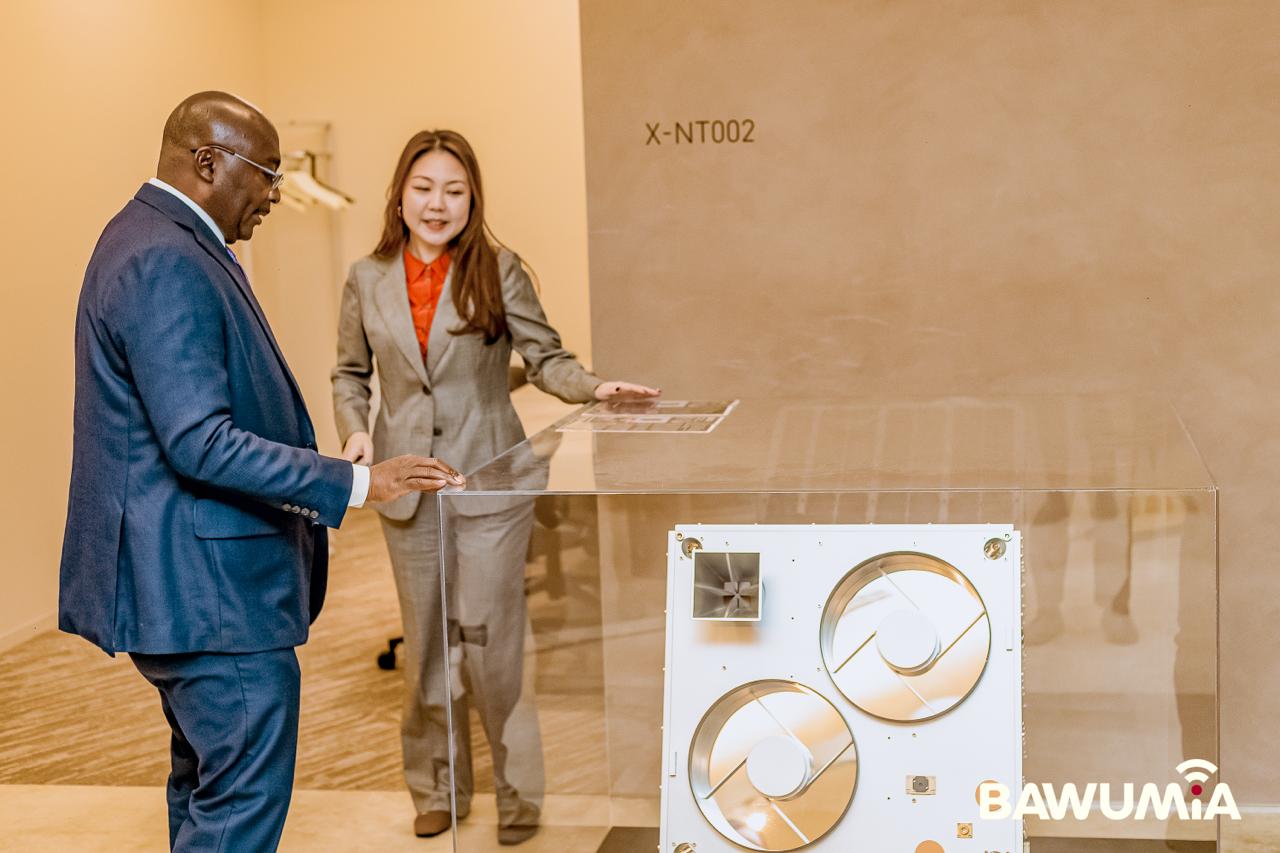
Dr. Bawumia, who is currently on a study tour of Japan, visited 3R, a cutting-edge environmental technology company he described as leading the way in sustainable innovation.
Sharing details of his visit, Dr. Bawumia said the company has developed a game-changing technology that can address the heavy pollution caused by illegal mining.
“As part of our study tour of Japan, I had the incredible opportunity to visit 3R, a cutting-edge environmental technology company leading the way in sustainable innovation,” Dr. Bawumia stated.
According to him, what 3R has developed goes beyond ordinary water treatment and can directly address Ghana’s biggest galamsey challenges – mercury pollution and land degradation.
“3R has developed advanced, game-changing technology capable of recycling water and cleaning contaminated soil by completely removing harmful heavy metals, including mercury,” he disclosed.
The former Vice President said seeing the innovation firsthand was inspiring, especially as Ghana continues to search for long-term solutions to reclaim lands and water bodies destroyed by galamsey.
“Seeing this innovation firsthand was truly inspiring, especially as we look for sustainable, long-term solutions to restore our lands and water bodies impacted by Galamsey here at home,” he said.
Dr. Bawumia believes such innovation shows that Ghana’s environment can still be healed with the right technology and political will.
“Innovation like this proves that with the right technology, determination, and foresight, we can heal our environment, protect our natural resources, and secure a safer, cleaner future for generations to come,” he added.
The 3R
The 3R (reduce, reuse, recycle) Initiative was launched at the Ministerial Conference on the 3R Initiative in Tokyo, Japan, in April 2005, to shift global consumption and production patterns toward a sound material-cycle society.
This followed the Sea Island Summit, where G8 countries agreed to establish the 3R Initiative in 2005, recognizing the importance of reducing barriers to the international flow of goods and materials for recycling and remanufacturing, building 3R capacity in developing countries, and encouraging multi-stakeholder collaboration.
UNCRD is collaborating with the Ministry of the Environment of the Government of Japan and other partners to further promote 3R activities, especially in developing countries in the Asia-Pacific.
3R Forum
In 2009, the Regional 3R Forum in Asia was established at Japan’s proposal as a platform for broad cooperation on the promotion of the 3Rs – reduce, reuse and recycle – in Asia.
Members include central governments, international agencies, aid agencies, private sector entities, research bodies, NGOs and other relevant parties.
Forum members have held high-level discussions on policies, supported the implementation of 3R projects in member countries, shared useful information, and are building networks to further promote 3R initiatives.
Japan hosted the inaugural Regional 3R Forum in Tokyo in 2009, and has co-sponsored subsequent Forums together with the governments of host countries and the United Nations Center for Regional Development (UNCRD) (external link). After the fourth forum, the name was changed to Regional 3R Forum in Asia and the Pacific.
The Fourth Regional 3R Forum – held in Ha Noi, Viet Nam, in March 2013 – adopted the Ha Noi 3R Declaration ‐ Sustainable 3R Goals for Asia and the Pacific for 2013‐2023.
It is a legally non-binding, voluntary document that aims to provide a basic framework for Asia-Pacific countries to develop measures and programs to promote 3Rs, including a set of 3R indicators for monitoring specific progress.
Japan will continue its efforts to expand cooperation with other governments, international agencies, and other bodies to build a sound material-cycle society worldwide.