

The New Patriotic Party (NPP) Minority Transport Policy Committee has questioned the Mahama administration’s latest railway acquisition, describing the newly imported locomotives as decades-old refurbished machines that raise serious concerns about value for money, operational sustainability, and the government’s commitment to transforming the railway sector.
While welcoming efforts to strengthen freight transportation and reduce pressure on the country’s road network, the Minority insists that the government has failed to provide critical information regarding the procurement of two diesel locomotives and twenty freight wagons recently unveiled for operations on the Tema–Mpakadan railway line.
According to the Committee, any investment that improves rail transport deserves support, as the railway sector remains central to reducing road congestion, lowering transport costs, facilitating trade, and supporting industrialization.
However, it argues that public investments of this nature must be accompanied by transparency and full disclosure.
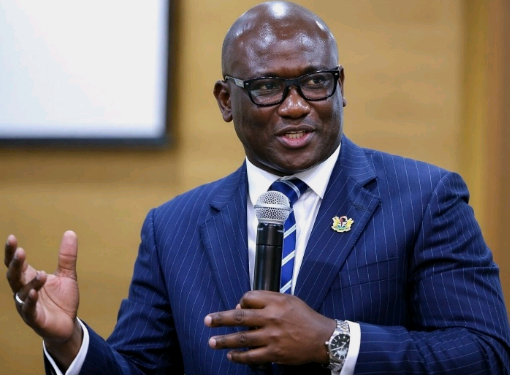
The Committee, chaired by Member of Parliament for Gushegu, Alhassan Sulemana Tampuli, said that available information indicates the locomotives are refurbished British Rail Class 56 diesel-electric engines, originally manufactured in the United Kingdom between 1976 and 1983.
According to the statement, the locomotives were previously operated by Colas Rail in Britain before being withdrawn from mainstream service. Of the 135 units originally manufactured, the Committee claims that fewer than 15 remain operational worldwide.
The Minority argues that although refurbished locomotives can continue to serve efficiently when properly maintained, the real issue is whether Ghana has acquired the most suitable and cost-effective equipment for the long-term development of its railway industry.
It notes that the Class 56 locomotives were originally designed for heavy freight transportation and earned a reputation for strength and reliability during their peak years.
However, the Committee notes that the technology is now more than four decades old, with mechanical systems significantly less advanced than those in modern freight locomotives.
According to the Minority, such aging equipment generally requires more intensive maintenance, consumes more resources, and incurs higher operating costs compared with newer locomotive designs that benefit from modern engineering, improved diagnostics, fuel efficiency, and enhanced reliability.
The Committee insists that the arrival of the locomotives should not overshadow fundamental questions regarding their operational lifespan, refurbishment history, expected remaining years of service, and total lifecycle costs.
Beyond the locomotives’ age, the Minority has also expressed concern about future maintenance arrangements and the availability of replacement parts.
It argues that, because the British Rail Class 56 fleet has largely been retired worldwide, sourcing spare parts could become increasingly difficult and expensive as manufacturers discontinue production and inventories continue to diminish.
The Committee is therefore demanding that the government disclose the long-term maintenance strategy supporting the acquisition.
Among the questions raised are whether the government has secured guaranteed supplies of spare parts, established strategic stockpiles of critical components, negotiated technical support agreements with specialist maintenance providers, and developed comprehensive technology transfer programs to train Ghanaian railway engineers.
The Minority cautions that without adequate maintenance planning and technical support, Ghana risks investing in equipment that could become increasingly difficult and costly to operate in the years ahead.
The Committee further compared the latest acquisition with the procurement of Diesel Multiple Units (DMUs) under the previous NPP administration.
According to the statement, the DMUs purchased from PESA of Poland were supplied as newly manufactured trains and came with a structured five-year maintenance and technical support programme, which ensured operational reliability while facilitating skills transfer to local engineers.
The Minority argues that successful railway investment extends far beyond purchasing locomotives and wagons, stressing that maintenance planning, technology transfer, training, and long-term operational sustainability are equally critical.
The Committee also questioned whether the Tema–Mpakadan railway corridor is fully prepared for commercial freight operations.
While the government has commissioned locomotives and freight wagons, the Minority says efficient rail transport depends on the availability of supporting logistics infrastructure, particularly at the Mpakadan terminal, where cargo is expected to be transferred between rail transport and the Volta Lake transport system.
According to the Committee, it remains unclear whether essential cargo-handling equipment such as mobile harbour cranes, reach stackers, container handling systems and bulk cargo loading facilities have been installed and commissioned.
Without these facilities, the Committee warns that freight movement between Tema, Mpakadan, and destinations along the Volta Lake could face serious operational bottlenecks.
The Minority also questioned the commercial viability of the railway project, arguing that rail infrastructure can only succeed if supported by sufficient freight demand.
The Committee wants government to disclose whether detailed market feasibility studies have been conducted, projected annual cargo volumes, revenue forecasts and whether binding haulage agreements have been signed with major industries expected to use the railway.
It also questioned the institutional framework under which freight operations will be managed following the closure of Ghana Railway Company Limited.
The statement further recalled the National Democratic Congress’s campaign promises during the 2024 general elections, particularly commitments to expand railway infrastructure and complete the Western Railway Line to facilitate the transportation of manganese, bauxite, and other bulk commodities.
According to the Minority, those ambitious promises appear inconsistent with the relatively modest allocation made to the railway sector in the 2026 national budget.
The Committee is therefore demanding clarification on how the government intends to finance the completion of the Western Railway Line, the implementation timelines, identified funding sources, and how current budget allocations align with campaign promises.
It also called on the government to explain when outstanding payments owed to railway workers would be settled.
Concluding its statement, the Minority reaffirmed its support for efforts to revive Ghana’s railway sector but stressed that success should not be measured merely by the arrival of locomotives and freight wagons.
Instead, the Committee argued, the true test of government policy will be the establishment of a modern, commercially viable, efficient, and sustainable railway network capable of driving national economic growth.
It maintained that Ghanaians deserve complete transparency regarding the cost, condition, maintenance arrangements, operational readiness, and long-term sustainability of every public investment in the railway sector.