

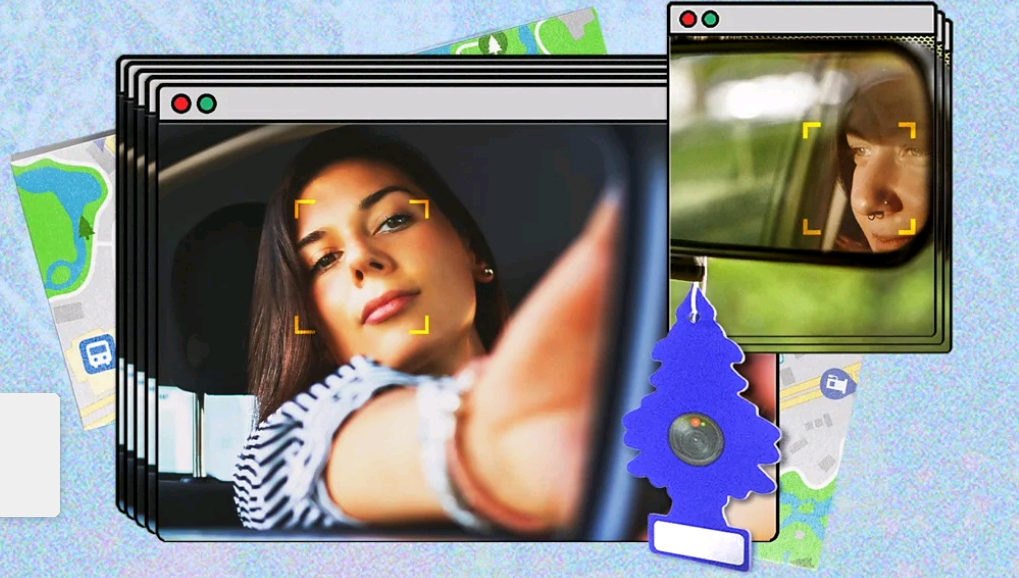
From your weight and facial expressions to your destination, cars collect a startling amount of data about you. Some of it may even raise your insurance costs. But you can take some simple steps to limit what they know about you.
Cars used to mean freedom. When I first got the keys to the old family Toyota it was a rite of passage, a sign I was old enough to step away from the watchful eyes of my parents and enter a world where time and decisions were mine alone. Things change.
Modern cars are computers on wheels, and giant corporations are using them to suck up intimate details about your life and make more money. If you think driving today is a chance for solitude and independence, think again. And it looks like it’s about to get a lot worse.
Car companies will tell you themselves if you wade through their privacy policies. The information they harvest can include precise location data about everywhere you go, who’s in the car with you, what’s on the radio, and whether you buckle your seatbelt, drive too fast, or brake too hard.
Some can gather details you might not expect, like your weight, age, race, and facial expressions. Do you pick your nose? Some cars have cameras inside, pointed at the driver’s seat. And most come with internet connections that can send that data off as you drive, in blissful ignorance.
This is a privacy problem that can cost you money. Among the biggest customers of car data are insurance companies, which use it to charge some people higher prices.
But there’s no telling where your information is going. Some car companies admit they sell your data, but they don’t have to say who’s buying. That’s to say nothing of the fact that you might find it a little creepy. Most consumers, experts say, have no idea it’s even happening.
“People would be shocked at the number of data points that their car collects and transmits to other people, either the manufacturer or third-party applications,” says Darrell West, a senior fellow in the Center for Technology Innovation at the Brookings Institution in Washington DC. “It basically means your life can be recreated almost on a second-by-second basis.”
Feeling uncomfortable yet? A federal law is about to increase the amount of data your car can gather about you. It will soon require American car companies to install infrared biometric cameras and other systems to scan your body language, track your eyes, or other aspects of your behaviour to detect whether you’re too drunk or tired to drive.
But it will also open up a whole new trove of data about your health and your habits. There are no rules limiting what the car companies can do with that information.
With automakers set to expand their data empires, this is a critical moment to understand what’s happening under the hood and how it affects you
Of course, there are benefits too. Internet-connected cars can be more convenient. The sensors they bristle with can make driving safer and more comfortable. Insurance companies could decide to charge you less because you’re such a good driver.
But with automakers set to expand their data empires, this is a critical moment to understand what’s happening under the hood and how it affects you.
The data superhighway
If your car is even relatively new, it’s probably involved. The consulting firm McKinsey found 50% of cars on the road in 2021 had internet connections and predicted the number would rise to 95% by 2030. If your car is hooked up to the internet, privacy is almost certainly an issue you need to care about.
Car companies can also snoop when you hook your phone up to the infotainment system, or if you use certain apps made for driving. Some drivers also use insurance companies’ telemetrics system, which monitor you in exchange for potential discounts.
A 2023 analysis by Mozilla, the maker of the Firefox browser, examined the privacy policies of 25 car brands. Every one failed to meet the privacy and security standards that Mozilla uses to compare brands. Mozilla said cars were “the worst product category we have ever reviewed for privacy”.
According to the report, car companies reserve the right to collect details including your name, age, race, weight, financial details, facial expressions, psychological trends and more. Kia’s privacy policy, for example, suggests the company may even collect details about your “sex life” and general health.
Kia spokesperson James Bell says the company has never actually collected data on drivers’ sex lives or health. These details only appear in Kia’s privacy policy because the company is listing California’s definition of “sensitive data”, he says.
Bell says Kia’s privacy practices are transparent, and the company only shares data with insurance companies if drivers opt in. The company did not, however, explain what kinds of “sensitive data” it collects.
Some of that might be hard to picture, but cars are littered with sensors: in the seats, the dashboard, the engine, the steering wheel, you name it. Many cars, for example, have cameras inside and out. If you’re doing something in a modern car, chances are there’s a way for companies to learn about it.
Mozilla found 19 of the car companies said they might sell your data, and that’s exactly what’s happening. For example, both state and federal agencies in the US took action against General Motors (GM) for allegedly selling car location data without consent. U.S. senators have accused Honda and Hyundai of similar practices – and these are just the examples the public knows about.
“They’re taking all the information they collect on you, which is a lot, and using it to make inferences about who you are, how intelligent you are, what your psychological profile is, what your political beliefs are,” says Jen Caltrider, a privacy analyst who led Mozilla’s car research. “That’s the stuff people don’t necessarily think about.”
There are basically no rules about who can buy this data or what it’s used for, Caltrider says. It can be used to market things to you. Companies could use it in hiring decisions. Law enforcement can buy car data when they can’t get a search warrant. Once it leaves your dashboard, you have no control over where it ends up.
It may be getting worse
This is about more than companies snooping on your private life. For example, General Motors sold driver information to LexisNexis, a data broker that buys and sells consumer data.
A driver who obtained a copy of that data reportedly found that LexisNexis had 130 pages of information detailing every trip he and his wife took over six months. He told the New York Times that after his insurance costs jumped by 21%, an insurance agent said the data was a factor. LexisNexis did not respond to a request for comment.
The US Federal Trade Commission took action, and GM is now barred from selling vehicle data for five years – but it’s free to resume the practice afterward, so long as it obtains express consent from drivers and follows other conditions.
Meanwhile, LexisNexis and other companies are still selling vehicle data they get from other car manufacturers and apps the people use while driving. GM and LexisNexis did not respond to requests for comment.
Deals between insurance companies, car makers, and data brokers are widespread, and as long as the practices are spelled out in privacy policies you agree to, it’s all perfectly legal.
“Insurance companies have been collecting vast amounts of consumer data, especially on consumer driving data, and using it to try and charge people higher premiums, deny coverage, or slice and dice consumers into various categories,” says Michael DeLong, a research and advocacy advocate who covers auto insurance for the Consumer Federation of America, a US-based non-profit.