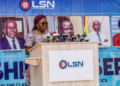


The minority in Parliament has challenged the government over the continued increases in utility tariffs, asking why recent macroeconomic gains are not translating into lower electricity costs for consumers.
Deputy Ranking Member on the Energy Committee, Collins Adomako-Mensah, told journalists in Accra Thursday (25 June) that the government has cited cedi appreciation, declining inflation, and lower interest rates as proof the economy has “turned a corner”.
Gains should reflect in daily lives
“If those gains are genuine, Ghanaians should be experiencing them in their daily lives,” Mr. Adomako-Mensah said.
He noted Ghana’s electricity sector relies heavily on thermal generation, with imported crude oil and natural gas priced in foreign currency.
He argued that a cedi that has appreciated by nearly 40% should significantly reduce the domestic cost of those imports.
“Falling inflation and easing interest rates should further reduce cost pressures across the economy. Yet the Public Utilities Regulatory Commission is increasing electricity tariffs once again. This contradiction demands answers,” he said.
Demands
“If the strength of the cedi is real, if the decline in inflation is real, and if the reduction in interest rates reflects genuine macroeconomic improvement, why are utility tariffs continuing to rise? What exactly is driving these increases?”
Mr. Adomako-Mensah said Ghanaians deserve “full transparency” beyond broad economic headlines. He criticized what he called inconsistencies in tariff adjustments, citing a 4.81% reduction in April, followed by a 3.49% increase scheduled for July.
“You cannot celebrate a 4.81% reduction in April and remain silent when a 3.49% increase follows in July. You own this tariff regime.
You appointed the leadership of the Public Utilities Regulatory Commission. You are accountable for every pesewa increase on every electricity bill in Ghana,” he said.
He urged civil society, trade unions, and industry groups to demand evidence-based regulation, and warned utility costs would remain politically significant ahead of the 2028 elections.
“You cannot keep increasing the pressure on the tap and hand Ghanaians a basket to fetch the water; this tariff regime leaks more than it delivers,” he said.
The Public Utilities Regulatory Commission (PURC) has announced an upward review of electricity and water tariffs, with consumers set to pay more for utility services from July 1, 2026.
Under the Commission’s third-quarter tariff review, electricity tariffs have been increased by 3.49 percent across the board, while water tariffs have been adjusted upward by 0.85 percent.
In a statement issued on Monday, June 22, PURC said the adjustments were made in line with its mandate to undertake quarterly tariff reviews to reflect changes in key operational factors affecting utility service providers.
According to the Commission, the review considered movements in the Ghana cedi-dollar exchange rate, inflation, electricity generation mix, and the cost of natural gas used in power generation.
PURC explained that the quarterly adjustments are intended to maintain the real value of tariffs and ensure that utility providers remain financially viable while continuing to deliver reliable services to consumers.
The Commission applied a weighted-average exchange rate of GHS11.2228 per US dollar for the third quarter of 2026, representing a 0.2 percent depreciation of the cedi compared to the previous quarter.
It also used a three-month average inflation rate of 3.43 percent, down from 4.17 percent in the second quarter, while the weighted average cost of natural gas declined by 1.58 percent to USD7.9708 per MMBtu.
The hydro-thermal generation mix remained unchanged at 20.9 percent hydro and 79.1 percent thermal generation.
Based on the combined impact of these indicators, PURC approved a 3.49 percent increase in electricity tariffs for residential, non-residential, and special load tariff customers.
For residential consumers, the lifeline tariff for users consuming up to 30 kilowatt-hours monthly increased from 86.9Gp per kilowatt-hour to 89.93Gp per kilowatt-hour.
Water tariffs were also adjusted upward by 0.85 percent across all customer categories, including residential, commercial, industrial, public institutions, and bulk consumers.
Under the revised rates, the residential lifeline tariff for water consumption of up to five cubic meters rose from 593.49Gp per cubic meter to 598.54Gp per cubic meter.
PURC said it remains committed to monitoring the performance of utility service providers and ensuring compliance with regulatory standards to guarantee value for money and improved service delivery.
The Commission expressed appreciation to stakeholders for their continued support in implementing quarterly tariff reviews and indicated that the decision will be published in the Gazette and on its website in due course.